BMI Chart
A BMI chart helps you understand where your weight falls based on your height. It shows categories such as underweight, healthy weight, overweight, and obese, making it easier to assess health risks and track weight loss progress.

Personalized Care, Tailored to You

Discreet. Private. Judgment-Free

Real Doctors. Real Results. Real Fast

Wellness That Fits Into Your Life
Personalized Care, Tailored to You
Discreet. Private. Judgment-Free
Real Doctors. Real Results. Real Fast
Wellness That Fits Into Your Life
🎉 New shop
Body Mass Index (BMI) is a simple measure of healthy weight based on height. It helps identify weight-related health risks. Check your BMI now for free and take the first step toward better health.
Body Mass Index (BMI) is a simple way to understand whether your weight is within a healthy range for your height. It’s often one of the first steps in identifying possible weight-related health risks and can give you a clearer picture of where your body stands today.
If you’re looking to lose weight, knowing your BMI can help you set realistic goals and choose the right path forward. While it’s not a complete measure of health, BMI is a helpful starting point when paired with professional guidance. You can also schedule an appointment with our team to discuss personalized, safe, and effective weight loss options.

Falls within a healthy BMI range for your height and is often linked to better overall health, balanced body weight and a lower risk of weight-related health issues.

Means your BMI is below the healthy range, which can be associated with low energy levels, nutritional deficiencies and difficulty maintaining a healthy body weight.

Indicates a high BMI and excess body weight which may increase the risk of obesity-related conditions such as heart disease, type 2 diabetes and metabolic health concerns.
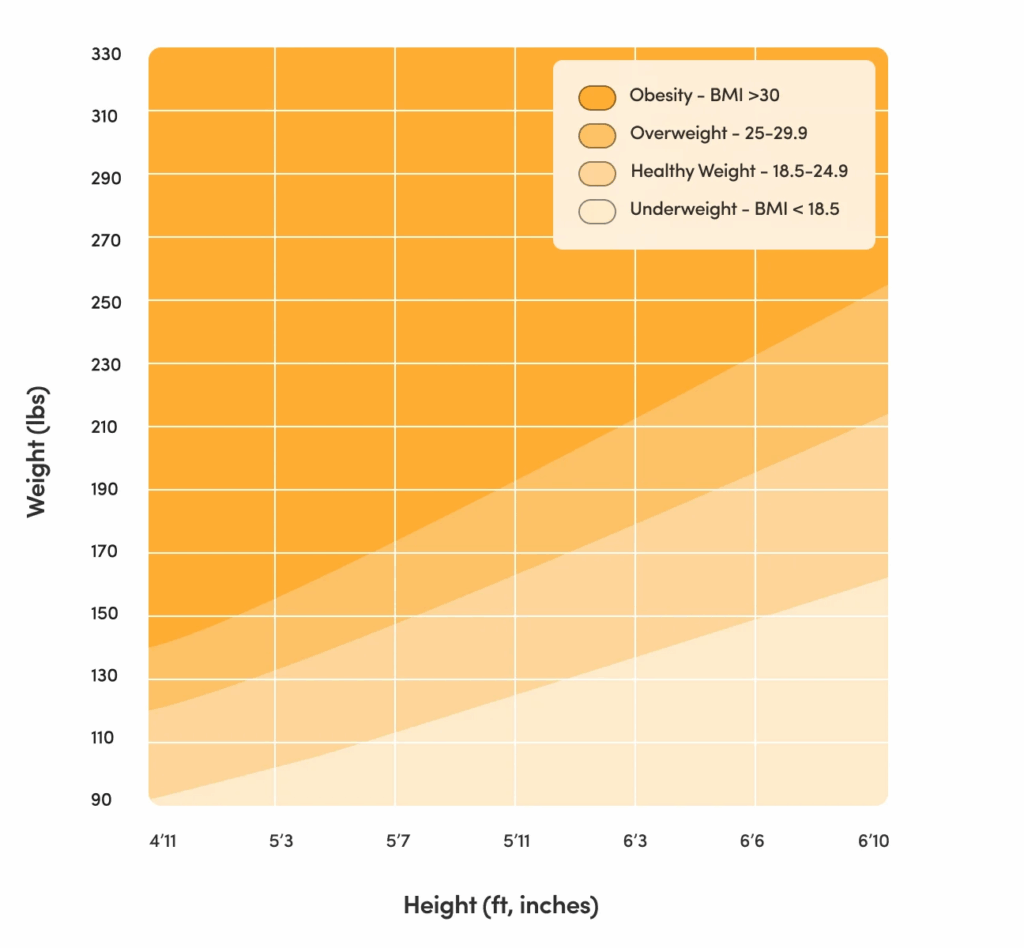
A BMI chart helps you understand where your weight falls based on your height. It shows categories such as underweight, healthy weight, overweight, and obese, making it easier to assess health risks and track weight loss progress.
BMI is calculated by dividing weight in kilograms by height in meters squared. Don’t worry, you don’t have to do the math yourself, calculators like this one exist to do it for you.
BMI helps assess a general idea of whether someone’s weight might put them at a higher risk for certain health problems. It is used for risk assessment for various health issues like heart disease, type 2 diabetes, and breathing issues. As a screening tool, it’s often used to assess the weight status in large populations helping public health officials to track trends and interventions.
BMI is helpful, but has limitations. It’s just one of many factors that can help you get a holistic picture of your overall health. Diet, exercise, sleep, and stress can all play a part in overall health, and they all impact our ability to gain or lose weight.